Abuja Nigeria insight on website development, custom software, and business growth.The real cost of a bad website
A weak website does not just look outdated. It actively destroys trust, reduces conversion, and leaks revenue every month. The cost is measurable, and most businesses are underestimating it.

Introduction
When business owners think about website cost, they usually focus on the amount required to build or redesign one. That is understandable, but it misses the larger number: what the current poor website is already costing every month.
A bad website affects more than aesthetics. It shapes how quickly people trust you, whether they stay long enough to understand your offer, and whether they ever become a lead. If the site is slow, confusing, outdated, or inconsistent, it becomes a hidden tax on growth.
In many cases, the website is not neutral. It is actively pushing revenue away.
Lost leads are the most obvious cost
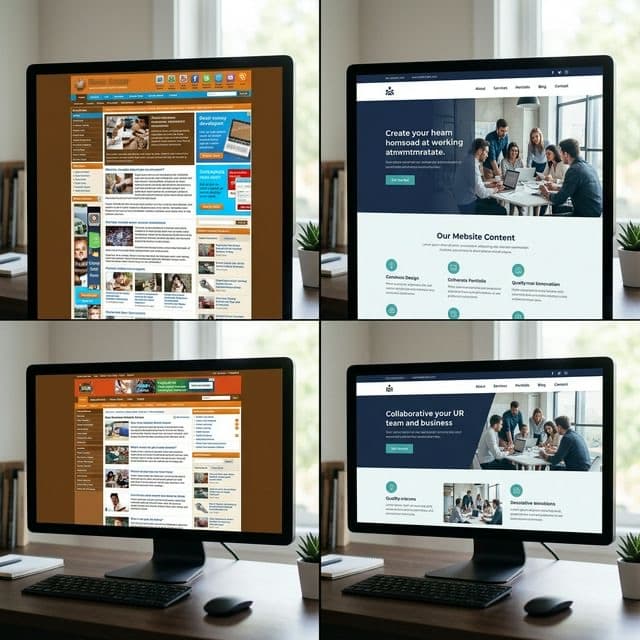
Imagine a company gets 2,000 site visits per month from referrals, search, and social media. If a weak site converts at 0.5 percent and a stronger site could convert at 2 percent, that is the difference between 10 leads and 40 leads monthly.
If just five of those extra 30 leads close at an average project value of ₦500,000, the monthly opportunity cost is ₦2.5 million. Over a year, that is ₦30 million in lost pipeline.
The exact numbers vary, but the pattern is common. Small conversion inefficiencies create very large annual losses.
Bounce rate has a financial meaning
A high bounce rate is not just a technical metric. It means people arrived, made a fast judgment, and left. Maybe the message was unclear. Maybe the page loaded too slowly. Maybe the design looked untrustworthy. Whatever the reason, attention was wasted.
If you paid for traffic through ads, the damage is even clearer. You are buying visitors and sending them to a page that fails to keep them. That makes every campaign more expensive than it should be.
Brand perception affects pricing power
A weak website also hurts margin. When your digital presentation feels cheap, buyers expect cheaper pricing. They question professionalism earlier and negotiate harder.
On the other hand, a strong website often improves close rates without changing the product itself. Better structure, clearer messaging, stronger proof, and more polished visuals can shift how your business is perceived. That changes how confidently people buy.
Real examples are usually operational, not theoretical
We have seen companies with excellent services lose deals because their sites looked abandoned. Missing contact details, inconsistent brand identity, unclear navigation, and generic layouts made prospects hesitate.
In service businesses, hesitation is expensive. A customer who does not trust the site rarely asks for clarification. They simply move to the next option.
Conclusion
The cost of a bad website shows up as lower trust, weaker conversion, wasted traffic, and reduced pricing power. Those losses compound quietly, which is why many teams overlook them for too long.
A redesign is not just a branding decision. In many cases, it is a revenue recovery decision.
Nuel
Founder & CEO, Nuelsville
Founder of Nuelsville Technologies. Building practical tech solutions for Nigerian SMEs and growth-focused operators since 2023.
Keep reading
Why every Nigerian SME needs a website in 2026
How we built The Global Hustlr
A practical breakdown of the product, content, and infrastructure choices behind The Global Hustlr. This is how we used Next.js App Router, Sanity, and Vercel to ship a fast editorial platform that could scale cleanly.
5 business processes you should automate today
Get insights before they're published.
Weekly provocations on tech, strategy, and design delivered to your inbox without the noise.
SubscribeNo spam. Ever. Verified by founders.