Abuja Nigeria insight on website development, custom software, and business growth.5 business processes you should automate today
Most SMEs do not need more hustle. They need fewer repetitive tasks draining time from the team. These are five high-impact processes that are usually worth automating first.

Introduction
Automation is often misunderstood as a luxury project for large companies. In reality, smaller businesses feel the pain of manual processes more sharply because the same few people are carrying sales, service delivery, finance, and follow-up at once.
When repetitive work stays manual, the real cost is not just time. It is inconsistency. Leads get forgotten, invoices go out late, reports arrive after decisions should have been made, and customers feel the gaps in your operation.
The best place to start is not with complicated AI experiments. It is with the boring processes that happen every day and quietly waste capacity.
Below are five automation opportunities that usually deliver value quickly for Nigerian SMEs.
1. Invoice generation and payment reminders
Manual invoicing slows down cash flow. If someone on your team still creates invoices one by one, sends them manually, and remembers follow-ups from memory, you are relying on human discipline for something that should be systematic.
Automated invoicing can generate bills from completed jobs, recurring retainers, or order confirmations. It can also trigger reminders at fixed intervals and log payment status in one place. The immediate result is faster billing and fewer awkward follow-up gaps.
2. WhatsApp follow-ups for leads and customers

WhatsApp is one of the most important business channels in Nigeria, but it becomes chaotic quickly when every response depends on someone remembering to reply. That is how warm leads go cold.
You do not need robotic spam. You need structured follow-up. New leads can receive an immediate acknowledgement, missed calls can trigger a callback prompt, and customers can get status updates automatically at the right moments. Done properly, this improves responsiveness without making conversations feel fake.
3. Lead capture from your website and forms
A lead form is only useful if the data lands somewhere actionable. Too many businesses collect inquiries that end up trapped in email inboxes, scattered spreadsheets, or forgotten chat threads.
Automating lead capture means new submissions can route instantly into a CRM, assign an owner, trigger an internal alert, and start a follow-up workflow. The goal is to reduce the time between interest and response.
4. Social media scheduling and approval
Social content becomes stressful when teams create, review, and post in an ad-hoc cycle. Last-minute publishing usually produces weaker content and inconsistent brand quality.
A scheduling workflow can centralize drafts, approval steps, publishing dates, and platform-specific posting. That does not replace creative judgment, but it removes the operational chaos around distribution.
5. Monthly reporting for management
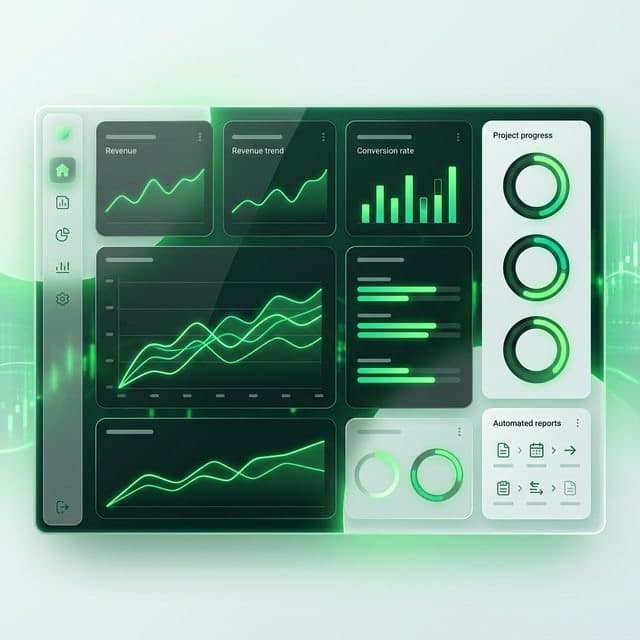
Many businesses spend the first week of each month trying to manually compile sales numbers, campaign performance, operations data, and finance summaries. By the time the report is ready, the decision window has already passed.
Automated reporting pulls the right numbers into a shared dashboard or scheduled summary. Leadership gets faster visibility, and teams stop rebuilding the same spreadsheet every month.
Conclusion
The best automation projects are not flashy. They remove friction from the business areas your team touches every day. Start with invoicing, follow-up, lead capture, scheduling, and reporting. Those processes are usually repetitive enough to automate and important enough to justify the effort.
When automation is done well, the business does not feel robotic. It feels more organized, more responsive, and easier to scale.
Nuel
Founder & CEO, Nuelsville
Founder of Nuelsville Technologies. Building practical tech solutions for Nigerian SMEs and growth-focused operators since 2023.
Keep reading
Why every Nigerian SME needs a website in 2026
How we built The Global Hustlr
A practical breakdown of the product, content, and infrastructure choices behind The Global Hustlr. This is how we used Next.js App Router, Sanity, and Vercel to ship a fast editorial platform that could scale cleanly.
The real cost of a bad website
A weak website does not just look outdated. It actively destroys trust, reduces conversion, and leaks revenue every month. The cost is measurable, and most businesses are underestimating it.
Get insights before they're published.
Weekly provocations on tech, strategy, and design delivered to your inbox without the noise.
SubscribeNo spam. Ever. Verified by founders.